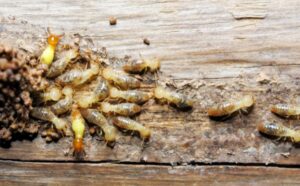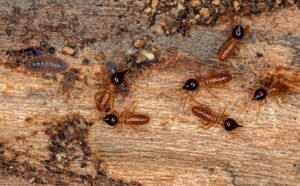
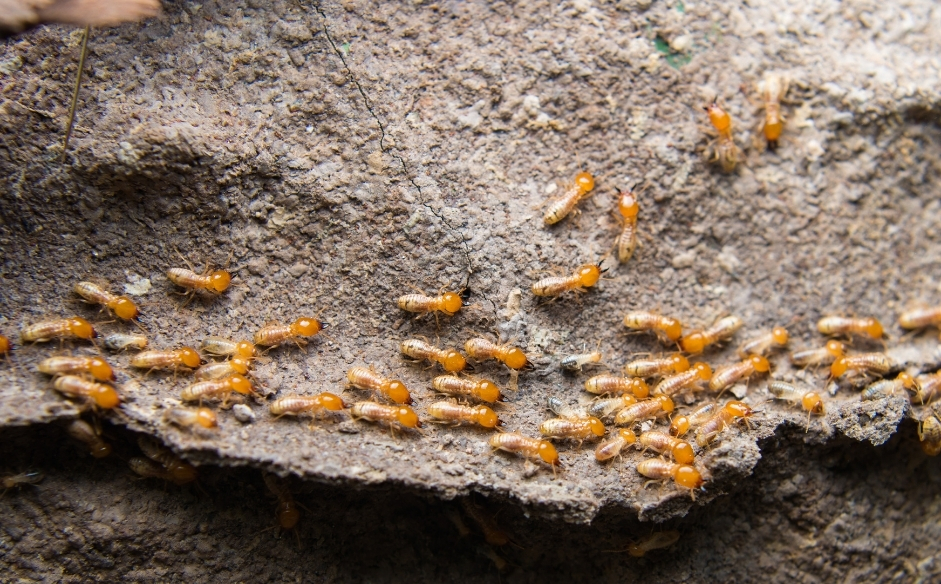
Short answer: Both termite baiting systems and liquid treatments can be effective for termite control, but they work differently.
Liquid treatments create a treated zone that helps prevent termites from reaching a property, while baiting systems use slow-acting bait to target termite colonies. The better option depends on the type of property, level of infestation, access conditions and long-term protection goals.

Introduction
Termites can be difficult to detect, because much of their activity takes place out of sight. By the time homeowners notice mud tubes, damaged wood or other visible signs, the infestation may already have been established for some time.
In Singapore, the warm and humid climate provides favourable conditions for termite activity throughout the year. Landed properties, homes with gardens and buildings with timber features can be particularly vulnerable, although termites can also affect apartments and other residential properties.
When deciding between a termite baiting system vs liquid treatment, it is important to understand how each method works, rather than simply comparing how quickly the results appear. The right approach should take into account the source of the infestation, the property’s layout, and how much disruption the treatment may involve.
How Liquid Termite Treatment Works
Liquid termite treatment uses a termiticide to create a treated zone in areas where termites may enter a property.
For subterranean termites, treatment is commonly applied to soil around or beneath parts of a building. Depending on the property’s construction and access, this may involve trenching, drilling or injecting treatment into suitable areas.
The objective is to create a continuous treated zone that termites cannot safely cross.
Creating A Treated Perimeter
For landed properties, treatment may be applied around the building’s perimeter to address potential entry points from the soil.
The continuity of the treated zone is important. Gaps around foundations, extensions, drainage areas or other structural features can create potential routes for termites to bypass the treatment.
Treating Existing Infestations
Liquid treatment may also be used where active termite activity has already been identified.
The treatment approach depends on where the termites are located and how accessible the affected areas are. A professional inspection is therefore important before determining the extent and method of application.
Advantages Of Liquid Treatment
Liquid treatment can be suitable for homeowners looking for a physical chemical barrier around vulnerable areas of a property.
Key advantages include:
- Provides a treated zone around potential entry points
- Can be used for certain active infestations
- Does not depend on termites finding bait stations
- Can provide longer-term protection when properly installed and maintained
- Suitable for various soil and structural treatment applications
However, the installation process can be more invasive than baiting, particularly where treatment requires drilling through hard surfaces or accessing soil beneath existing finishes.
What Is A Termite Baiting System?
A termite baiting system takes a different approach.
Instead of creating a chemical barrier, bait stations are positioned where termite activity can be monitored. The bait contains a slow-acting active ingredient that termites consume and can transfer through the colony.
The objective is to exploit termite social behaviour and gradually reduce the colony rather than simply preventing individual termites from entering a particular area.
In-Ground Bait Stations
In-ground stations can be installed around the exterior of a property, particularly in soil or landscaped areas.
They provide locations where termite activity can be monitored. If termites begin feeding on the bait, the treatment can be managed and replenished by the pest control professional.
Above-Ground Bait Stations
Above-ground stations can be used where active termite activity has already been identified inside a building.
They may be placed directly over active termite workings or other affected areas, allowing termites to access the bait without extensive drilling or excavation.
Advantages Of Termite Baiting
Baiting systems can be attractive, where homeowners want to minimise physical disruption to the property.
Potential advantages include:
- Minimal drilling or excavation in many applications
- Targeted treatment of active termite activity
- Ongoing monitoring
- Potential to target the colony rather than individual termites
- Less disruption to landscaping and finished surfaces
- Useful where creating a continuous liquid barrier is difficult
The main limitation is that baiting is not an instant solution. Termites need to find and consume the bait, after which sufficient bait must be distributed through the colony for effective control.
Termite Baiting System vs Liquid Treatment
The two methods differ mainly in how they approach termite control.
Factor | Termite Baiting System | Liquid Treatment |
|---|---|---|
Main approach | Targets termite colonies through bait | Creates a treated zone against termite entry |
Speed | Generally slower | Can provide immediate treated-zone protection |
Installation | Usually less invasive | May require drilling, trenching or injection |
Monitoring | Requires regular professional monitoring | Generally requires less frequent monitoring after installation |
Existing infestation | Can target active termite activity | Can address active areas and potential entry routes |
Property disruption | Generally lower | Can be higher depending on application |
Best suited to | Properties where ongoing monitoring and targeted colony control are priorities | Properties where a treated perimeter or soil treatment is practical |
Neither approach is automatically better for every Singapore home.
Which Method Is Faster?
Liquid treatment generally provides a faster form of protection, because the treated zone is established as part of the application process.
Baiting takes longer, because termites need to discover the station, feed on the bait, and distribute the active ingredient through the colony.
This difference is important when dealing with an active infestation.
If termites already cause visible damage, a professional may recommend a treatment strategy that addresses the immediate activity, while also considering longer-term colony management.
Which Method Is Less Disruptive?
Baiting generally involves less physical disruption, because stations can be installed in suitable locations without extensive drilling or trenching.
This can be particularly useful for homes with:
- Expensive tiles
- Finished patios
- Established landscaping
- Decorative flooring
- Difficult-to-access foundations
Liquid treatment may require drilling through concrete or hard surfaces to reach the soil beneath. Professional contractors can often minimise the visual impact by carefully selecting treatment points, but some physical work may still be necessary.
Which Method Is Better For Long-Term Protection?
Long-term protection depends on more than the treatment method itself.
A liquid system can provide ongoing protection around treated areas, but its effectiveness depends on proper installation, the condition of the treated zone, and subsequent changes to the property.
A baiting system provides an ongoing monitoring approach, but its effectiveness depends on regular inspections and appropriate maintenance of the stations.
For this reason, homeowners should look beyond claims about treatment duration and consider how the system will be monitored and maintained over time.
Can You Combine Baiting And Liquid Treatment?
In some situations, a combination approach may be appropriate.
For example, a property with active termite activity may require treatment of the affected area, while a baiting system is used for ongoing monitoring around the property.
The appropriate combination depends on the infestation, building construction and treatment objectives.
A professional inspection can determine whether one method is sufficient or whether multiple control measures are needed.
Choosing the Right Termite Treatment For Your Home
There is no universal answer to the termite baiting system vs liquid treatment question.
Consider the following factors before choosing a treatment.
Property Type
A landed house with a garden and accessible soil may present different treatment opportunities from a condominium or high-rise apartment.
Existing Termite Activity
If there is an active infestation, the location and extent of the activity should be identified before selecting a treatment.
Access
The ability to access soil, foundations, walls and other potential termite entry points can influence which treatment method is practical.
Property Finishes
Homes with expensive tiles, landscaping or other finished surfaces may benefit from an approach that minimises drilling and excavation.
Long-Term Monitoring
If ongoing monitoring and early detection are priorities, a baiting system may be worth considering.
Budget And Maintenance
The initial installation cost is only one consideration. Homeowners should also account for monitoring, maintenance and potential future treatment requirements.
Why A Professional Termite Inspection Matters
Termite activity is not always visible.
A homeowner may notice damage in a door frame or cabinet, but that does not necessarily indicate where the colony is located. Termites can travel through concealed areas and enter structures through small gaps.
A professional inspection can help determine:
- Whether termites are currently active
- Which termite species may be involved
- Where activity is concentrated
- Potential entry points
- The extent of visible and concealed damage
- Whether baiting, liquid treatment or another approach is appropriate
This information helps ensure that treatment is based on the actual conditions of the property, rather than simply choosing the most familiar method.
What Homeowners Should Do After Treatment
Termite control does not necessarily end once treatment has been completed.
Homeowners should continue to watch for signs such as:
- New mud tubes
- Discarded wings
- Hollow-sounding timber
- Damaged wooden surfaces
- Termite activity around doors or windows
- New moisture or damp areas
- Changes around previously treated locations
Regular inspections can help identify renewed activity early.
It is also worth addressing conditions that may make the property more attractive to termites, such as excessive moisture, leaking pipes, untreated timber in contact with soil and poor drainage.
Final Thoughts
When comparing a termite baiting system vs liquid treatment, the key difference is how each method approaches termite control.
Liquid treatment focuses on creating a treated zone that helps prevent termites from entering or moving through vulnerable areas. It can be useful where rapid protection and accessible soil treatment are priorities.
Termite baiting systems take a more targeted approach by using termite behaviour to deliver slow-acting bait to the colony. They can be useful where minimal disruption and ongoing monitoring are important.
Get Expert Advice from Ninja Pest
Every property is different, and the right termite treatment depends on your specific situation, from construction type and existing activity to accessibility and long-term protection goals.
Don’t leave it to guesswork. Contact Ninja Pest today for a professional inspection and find out which solution is right for your home.