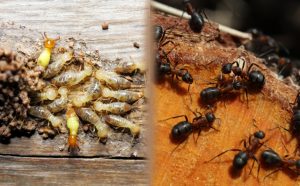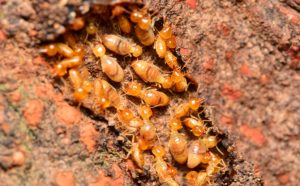
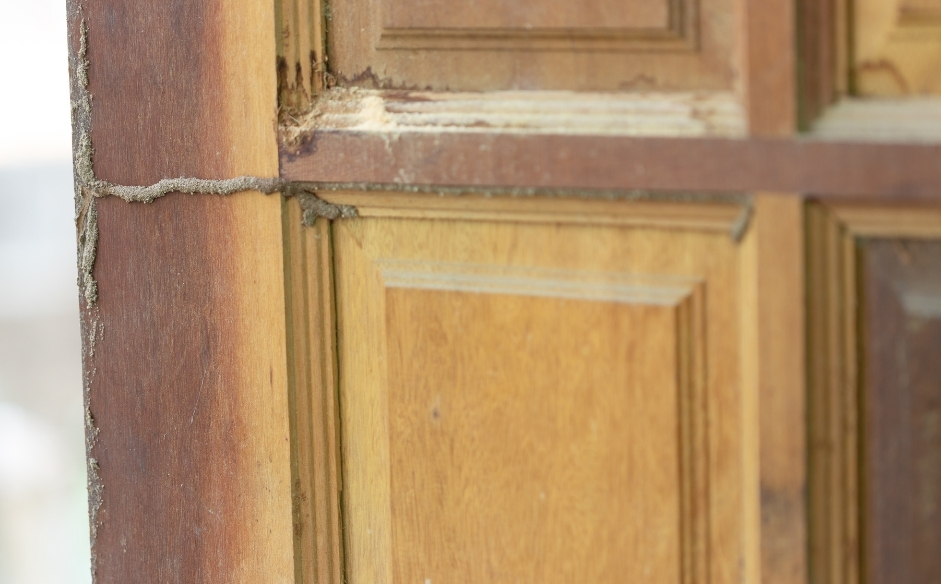
Short answer: Common signs of termites in wooden door frames include mud tubes, hollow-sounding timber, blistering or bubbling paint, damaged or weakened wood, discarded wings and termite droppings.
However, some of these signs can resemble moisture damage or wood-boring insect activity, so a professional inspection is recommended before deciding on treatment.
Introduction
A wooden door frame may not be the first place you expect to find termites, but it can become vulnerable when termites gain access to the timber through wall cavities, flooring or other parts of a building.
Termite damage can also remain hidden for some time. Termites often consume timber from the inside, leaving the outer surface looking relatively normal until the damage becomes more extensive.
This makes early detection particularly important for homeowners in Singapore. If you notice unusual marks, damaged wood or a door that suddenly becomes difficult to close, it is worth investigating rather than assuming the problem is simply caused by humidity or ageing.
Knowing the signs of termites in wooden door frames can help you identify a potential problem early and determine when professional termite control may be necessary.
Why Do Termites Target Wooden Door Frames?
Wooden door frames contain cellulose, which is a food source for termites. Their position can also make them accessible to termites travelling through concealed areas of a building.
Moisture can make the surrounding environment more favourable for termite activity, although termites do not necessarily require visibly wet wood to infest a structure.
Door frames located near kitchens, bathrooms, balconies or other areas exposed to moisture may therefore deserve closer attention.
Other factors that may increase the risk include:
- Cracks or gaps around walls and floors
- Timber in contact with or close to soil
- Moisture problems or leaks
- Concealed wall cavities
- Landscaping close to the building
- Existing termite activity elsewhere on the property
Common Signs of Termites in Wooden Door Frames
Termites can be difficult to spot directly, so homeowners often need to look for evidence of their activity.
Here are some of the most common warning signs.
1. Mud Tubes Around The Frame
Mud tubes are one of the more recognisable signs of subterranean termite activity.
They may appear as narrow, soil-like tunnels running along:
- The bottom of the door frame
- Corners of walls
- Skirting boards
- Floor-to-wall junctions
- Gaps around the frame
Subterranean termites construct these sheltered pathways to travel between their colony and food sources.
Finding a mud tube does not necessarily tell you the full extent of the infestation, but it is a strong reason to have the area professionally inspected.
2. Hollow-Sounding Wood
Termites can consume timber internally while leaving a relatively thin outer layer intact.
As a result, tapping along a damaged door frame may produce a dull or hollow sound compared with solid sections of wood.
Homeowners can use this as a basic observation, but it should not be treated as a definitive diagnostic test. Wood can sound hollow for other reasons, and professional inspection is needed to determine whether termite activity is actually present.
3. Bubbling Or Blistering Paint
Paint that begins to bubble, blister or appear uneven can sometimes indicate termite damage beneath the surface.
However, this symptom can also be caused by moisture, poor paint adhesion or other building issues.
If blistering appears alongside mud tubes, weakened timber or other termite indicators, the area should be investigated more closely.
4. Damaged Or Crumbling Timber
Severe termite activity can leave timber weakened.
You may notice:
- Soft or damaged sections
- Crumbling wood
- Small cracks
- Areas that break away easily
- Visible galleries beneath damaged surfaces
Do not assume that a small visible area represents the full extent of the damage. Termites can move through concealed sections of a frame and surrounding structure.
5. Doors That Suddenly Stick
A door that becomes difficult to close or latch may have several possible causes.
Changes in humidity can cause timber to expand, while movement or settlement can affect the alignment of a door.
However, swelling or deterioration associated with termite damage can also contribute to changes in how a door operates.
If a previously well-fitting door suddenly begins sticking and other warning signs are present, it is worth having the frame inspected.
6. Discarded Wings
You may occasionally find small piles of translucent wings around windows, doors, lights or other areas of the home.
These can be left behind by winged reproductive termites after a swarm.
Discarded wings do not necessarily mean that the termites are actively feeding on the door frame itself, but they can indicate termite activity nearby and should not be ignored.
7. Termite Droppings
Drywood termites can leave behind small, hard pellets known as frass.
These may accumulate beneath infested timber or around openings in the wood.
However, the type of debris found around a door frame can help distinguish termites from other wood-damaging insects. A professional inspection is useful if you are unsure what you are seeing.
A Quick Checklist For Homeowners
If you suspect termite activity, check the door frame for the following signs:
Sign | What It May Indicate |
|---|---|
Mud tubes | Possible subterranean termite activity |
Hollow-sounding timber | Possible internal wood damage |
Bubbling or blistered paint | Possible damage beneath the surface, although moisture can cause similar symptoms |
Crumbling or weakened wood | Potential timber deterioration |
Discarded wings | Possible termite swarming activity nearby |
Small pellets | Possible drywood termite activity |
Door suddenly sticking | Possible timber swelling or deterioration |
No single sign should be used to confirm an infestation. Looking at several indicators together provides a better basis for deciding whether professional inspection is necessary.
Termites vs Wood Borers: What Is The Difference?
Not every damaged wooden door frame has termites.
Wood-boring insects can also damage timber and may leave behind holes or powder-like material.
One useful distinction is the type of debris or damage observed.
Termites
Depending on the species, termites may leave:
- Mud tubes
- Damaged or hollow timber
- Discarded wings
- Small pellets in the case of some drywood termites
Wood Borers
Wood-boring beetles can leave small exit holes and fine wood dust or frass.
The appearance of the holes and debris can provide clues, but identifying the pest based solely on what you see can be difficult.
This distinction matters because termite control and wood-borer treatment are not necessarily the same.
Are Mud Tubes Always A Sign Of An Active Infestation?
Mud tubes are an important warning sign, but homeowners should not assume that every old or damaged tube represents current activity.
A professional can assess the condition of the tube and surrounding area to determine whether there are signs of ongoing termite activity.
Avoid relying on a simple test such as breaking the tube and waiting for it to be rebuilt. Disturbing termite workings can interfere with the colony’s normal activity and may make subsequent inspection more difficult.
What Should You Do If You Find Termites?
The first step is to avoid making the problem worse.
Do Not Immediately Spray The Area
Household insecticide may kill termites that are directly exposed to the spray, but it does not necessarily address the colony.
Termites can live in concealed areas or underground, meaning that killing the visible insects does not necessarily eliminate the source of the infestation.
Do Not Start Removing The Damaged Timber
It may be tempting to immediately replace the affected door frame.
However, replacing damaged timber before determining whether termites are still active may only solve the visible part of the problem.
If the colony remains elsewhere, newly installed timber could potentially become exposed to the same infestation.
Document What You Find
Take photographs of:
- Mud tubes
- Damaged areas
- Discarded wings
- Droppings or debris
- Visible insects
- Any other unusual changes
This information can help a pest control professional understand what you have observed before carrying out a detailed inspection.
Why Professional Termite Inspection Matters
Termite activity can extend beyond the area where damage is visible.
For example, a damaged door frame may be connected to activity within a wall cavity, beneath the floor or elsewhere around the property.
A professional inspection can assess the wider area and look for additional signs of activity.
Depending on the property and inspection requirements, this may include checking:
- Door and window frames
- Skirting boards
- Built-in cabinets
- Flooring
- Wall junctions
- Moisture-prone areas
- External soil and landscaping
- Other timber structures
This broader assessment can help determine whether the problem is isolated or part of a larger infestation.
How Is Termite Damage In A Door Frame Treated?
The appropriate treatment depends on the type of termite, location of the colony and extent of the infestation.
Possible approaches include:
Termite Baiting Systems
Baiting systems use stations containing termite bait. Foraging termites feed on the bait, allowing the active ingredient to be distributed through the colony.
This approach can be useful where ongoing monitoring and colony-level control are priorities.
Liquid Termite Treatment
Liquid treatments use termiticides to create treated zones around appropriate areas of a building.
Depending on the property’s construction, treatment may involve soil application, drilling or injection.
Targeted Treatment
Where termite activity is concentrated in a particular location, targeted treatment may be considered.
However, the visible door frame may not be the actual location of the colony, which is why inspection should come before deciding on a treatment strategy.
How Can Homeowners Reduce Termite Risk?
There is no way to guarantee that a property will never encounter termites, but good building maintenance can help reduce conditions that may contribute to termite problems.
Homeowners can:
- Fix plumbing leaks promptly
- Address persistent damp areas
- Maintain good drainage
- Avoid unnecessary timber-to-soil contact
- Check timber structures periodically
- Keep landscaping from obstructing building inspection areas
- Arrange professional inspections if suspicious signs appear
Regular checks are particularly useful for properties with extensive timber features or previous termite activity.
Why Early Detection Matters
Termite damage can become more difficult and expensive to address when an infestation remains undetected for a long period.
A damaged door frame may initially appear to be a minor carpentry issue. However, if termites are responsible, replacing the frame without addressing the infestation may not prevent further damage.
Early inspection can help establish:
- Whether termites are present
- Whether the activity is ongoing
- What areas may be affected
- What treatment options are appropriate
- Whether damaged timber should be repaired or replaced
The earlier the source is identified, the easier it is to develop an appropriate treatment plan.
Professional Termite Control With Ninja Pest
If you have noticed signs of termites in a wooden door frame, professional assessment can help determine whether the damage is caused by termites and how far the activity may have spread.
Ninja Pest provides termite control services in Singapore, with treatment options selected according to the property and infestation. A professional inspection can help identify termite activity and determine an appropriate control strategy, rather than relying on surface treatment alone.
For homeowners, this is particularly important when the affected door frame is close to other timber features, such as built-in cabinets, flooring or wall structures.
Final Thoughts
Wooden door frames can show some of the earliest visible signs of termite activity, but these signs are not always obvious.
Mud tubes, hollow-sounding timber, bubbling paint, weakened wood, discarded wings and termite droppings can all warrant further investigation. At the same time, moisture problems and wood-boring insects can produce similar symptoms, making professional identification important.
If you discover suspicious damage, avoid relying solely on household insecticides or replacing the affected frame. The underlying source should be identified first.
For Singapore homeowners, regular inspection and early professional intervention can help limit the potential spread of termite activity and protect the property’s timber components over the long term.