When you renovate your home, you expect everything to be fresh, modern, and safe. False ceilings and built-in carpentry are popular choices in Singapore for creating sleek designs and maximising storage. But behind the polished finish, a hidden threat could be lurking—termites.
Contractors rarely highlight termite risks when they hand over your renovated home. After all, their job is to build and install, not to prevent pest infestations. Unfortunately, termites can quietly eat away at your investment long before you notice the damage.
This blog will explore why false ceilings and built-ins are termite hotspots, what contractors often leave unsaid, and how you can protect your home.
Why False Ceilings and Built-Ins Attract Termites
False ceilings and built-in cabinets provide termites with the perfect environment:
- Enclosed spaces – Termites thrive in dark, hidden areas where they’re less likely to be disturbed.
- Wood and laminates – Many built-ins use plywood, MDF, or laminate over wood, which serve as food sources.
- Moisture and leaks – Poor ventilation or hidden plumbing leaks create humid conditions that termites love.
- Concealed pathways – Termites often travel through cracks in walls, trunking, or voids above ceilings.
Because these areas are rarely inspected, infestations can spread silently for months or even years.
What Contractors Won’t Tell You
Most homeowners assume contractors will address pest risks during renovations—but this is rarely the case. Here are a few truths that aren’t always shared:
a) Limited Warranty Coverage
Renovation contracts usually cover workmanship issues, not pest infestations. If termites attack your built-ins months later, you’ll likely bear the repair costs yourself.
b) Use of Untreated Materials
Not all wood used in false ceilings or built-ins is termite-resistant. To keep costs down, some contractors use cheaper materials without anti-termite treatment. Unless you request treated wood, your carpentry may be vulnerable.
c) Concealed Vulnerabilities
False ceilings and built-ins can hide termite entry points:
- Gaps in walls or skirting boards
- Electrical conduits and trunking
- Plumbing voids and ceiling spaces
Contractors rarely point these out, even though they’re prime termite access routes.
d) Post-Renovation Risks
After renovation, leftover debris or untreated wood scraps can attract termites. Most contractors don’t provide guidance on pest prevention once the project is complete.
Signs of Termite Infestation in False Ceilings and Built-Ins
Termite damage often goes unnoticed until it becomes severe. Watch for these warning signs:
- Hollow wood – Built-in cabinets or skirting that sound hollow when tapped.
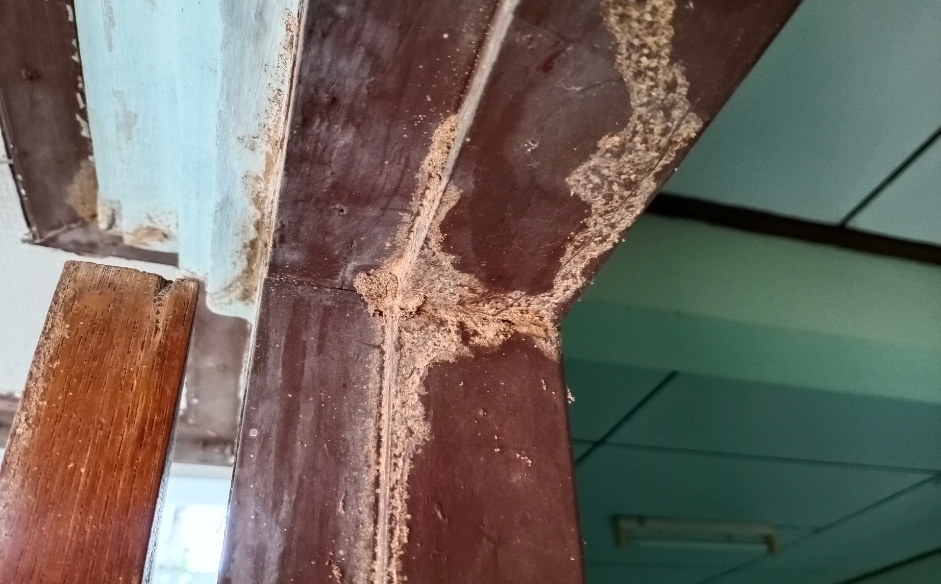
- Mud tubes – Thin, brown tunnels running along walls, ceilings, or corners.
- Bubbling paint or warped panels – Termites eating wood beneath the surface can cause swelling or uneven finishes.
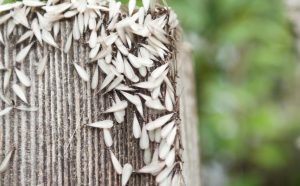
- Discarded wings – Piles of small wings near lights or windows, left by flying termites (alates).
- Sagging ceilings – False ceilings that appear warped or uneven may indicate termite damage inside.
What You Can Do to Protect Your Home
The good news: you don’t have to wait until termites cause costly repairs. With some foresight and action, you can reduce risks.
During Renovation
- Request termite-resistant materials such as treated plywood or solid wood.
- Ask for documentation on material sources and treatment.
- Seal gaps and cracks during installation to eliminate entry points.
- Ensure ventilation in areas like wardrobes and ceiling voids to reduce humidity.
After Renovation
- Conduct regular checks of false ceilings, built-ins, and hidden corners.
- Reduce moisture with dehumidifiers, especially in humid rooms like bathrooms.
- Avoid clutter—stored cardboard and paper attract termites.
- Engage preventive termite treatment with a pest control professional to protect vulnerable structures.
Why Professional Termite Control Is Essential
Contractors focus on building; pest prevention requires a different expertise. Professional pest control specialists can:
- Detect hidden infestations with advanced tools like moisture meters and thermal scanners.
- Apply protective treatments such as soil barriers, baiting systems, or wood treatments.
- Provide ongoing monitoring to catch termite activity early.
- Use NEA-certified methods that are safe for your family and pets.
Relying only on renovation quality is not enough—long-term termite control and prevention needs a professional approach.
Takeaway
False ceilings and built-ins may make your home look sleek, but they also create the perfect hiding spots for termites. Contractors rarely highlight these vulnerabilities, leaving homeowners unprepared for the risks.
By being proactive—choosing termite-resistant materials, inspecting regularly, and engaging professional pest control—you can protect your home from the silent damage termites cause.
If you suspect termite activity or want preventive treatment for your home, it’s best to consult an NEA-certified pest control company. Acting early could save you from expensive repairs and give you peace of mind in your beautifully renovated space.